
The Soft Autumn Palette: How to Tell If You’re a Soft Autumn, And What It Actually Means
- Monica Thompson

- Apr 10
- 8 min read
Updated: Apr 20
A Guide to Soft Autumn in the 12-Season Colour System
In this detailed guide, you’ll discover everything you need to know about the Soft Autumn colour season, including:
✔ The defining characteristics of Soft Autumn, including typical hair, eyes, skin tone, and contrast
✔ A complete breakdown of the Soft Autumn colour palette, including best colours and neutrals
✔ Expert guidance on how to wear your colours and where to invest in your wardrobe
✔ Soft Autumn outfit strategies that create a soft, elegant, and effortlessly polished look
✔ How Soft Autumn sister palettes can expand your options while maintaining harmony
✔ Why a professional colour consultation is the most accurate way to confirm your season
If you want absolute clarity on your season — especially before investing in your wardrobe, makeup, or hair colour — a professional colour analysis removes the guesswork and shows you the difference in real time.

Soft Autumn is one of the three Autumn seasons in the 12-season colour analysis system. Like all Autumn types, its defining characteristics are Warm, Muted, and Soft, with softness (mutedness) being the dominant trait.
Soft Autumn sits between Soft Summer and True Autumn on the seasonal flow chart. It shares Soft Summer’s blended softness and True Autumn’s warmth — but without Summer’s coolness or Autumn’s richness.
Compared to True Autumn, Soft Autumn is lighter and more subdued. Compared to Soft Summer, it is warmer and more earthy.
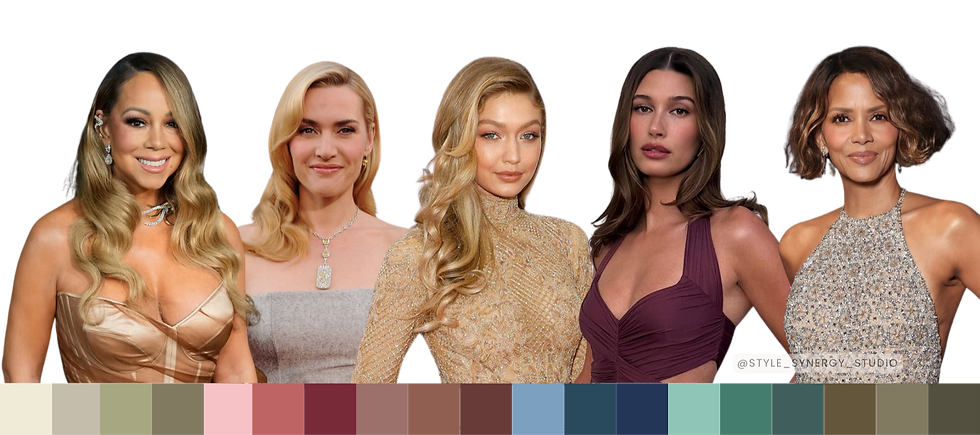
The Soft Autumn colour palette is gentle, earthy, and naturally muted — think dried grasses, warm taupe, clay rose, soft olive, muted teal, and weathered wood tones. These colours feel calm and harmonious rather than bright, crisp, or high-contrast.

How do I know if I am a Soft Autumn?
The key characteristics of Soft Autumn include typical hair, eyes, skin undertone, and overall contrast.

Before reviewing the characteristics below, it’s important to remember that colour analysis is about harmony, not perfection. You don’t need to match every trait to belong to a season — what matters most is how colour interacts with your natural features.
It’s also important to acknowledge that traditional colour analysis has historically focused on lighter skin tones. At Style Synergy Studio, we recognise that Soft Autumn colouring appears across all ethnicities. Softness and coolness can show up differently depending on your background — and that variation is completely valid.
If you feel unsure, sit between seasons, or want to avoid costly wardrobe or hair mistakes, a professional colour analysis is the most reliable way to determine your season.
Typical Characteristics of a Soft Autumn
Soft Autumn is defined by gentle warmth, muted colouring, and low-to-medium contrast. This season radiates softness, approachability, and understated elegance.
Overall Appearance
✔ Your overall look appears soft, blended, and harmonious rather than sharp or high-contrast
✔ Your colouring looks warm and muted rather than bright, clear, or cool
✔ Earthy, toned-down colours are more flattering than bold, icy, or very dark shades

Hair
✔ Hair is typically light to medium in depth — dark blonde, light brown, soft auburn, or muted chestnut
✔ Undertones are warm or neutral-warm, such as beige, caramel, or soft copper rather than golden or ashy
✔ Hair often appears softly textured or matte rather than glossy or high-shine


💡 Need help choosing the right hair colour for your season?
For Soft Autumns, the right hair colour enhances softness and warmth, while overly bright or very dark shades can overpower your features. Our Soft Autumn Hair Colour Guide includes tailored shade recommendations, celebrity inspiration, salon-ready advice, and expert tips for transitioning to grey — so you can make confident, informed decisions.
Eyes
✔ Eyes appear soft, warm, and blended rather than bright or high-contrast
✔ Common eye colours include hazel, warm brown, muted green, or soft blue
✔ In deeper skin tones, softness often shows through gentle depth rather than sharp clarity
✔ Eyes tend to have a calm, velvety quality rather than sparkle or intensity

Skin
✔ Skin can range from very light to deep, with a warm or neutral-warm undertone
✔ Undertones may appear beige, peachy, soft golden, or warm olive
✔ Soft warm metals such as gold, bronze, and brushed finishes are typically more flattering than bright silver
✔ Lips often have a naturally muted rose, peach, or warm nude tone

Contrast Level
✔ Soft Autumn has low to medium contrast — features blend gently
✔ Your colouring feels cohesive rather than defined by strong contrast
✔ Outfits look best when they reflect this softness
✔ High contrast (black and white, neon brights, icy pastels) can feel overpowering
✔ Understanding contrast helps guide colour combinations, prints, and makeup intensity

Remember, these traits are guidelines, not requirements. A professional colour consultation offers the most accurate result — especially before investing in clothing, hair colour, or makeup changes.
The Soft Autumn Colour Palette
The Soft Autumn palette is warm, muted, and gently earthy. Colours are softened with grey or brown undertones — think dusty rose, clay, mushroom, soft olive, muted teal, and warm taupe.
As the softest Autumn palette, Soft Autumn prioritises mutedness first, followed by warmth. These colours are never bright, icy, or high-contrast. Instead, they feel calm, lived-in, and naturally elegant — like a weathered autumn landscape.
✔ No bright, clear, or icy shades — softness is essential
✔ Colours enhance natural harmony and create an even, balanced complexion
✔ Even deeper colours remain soft and blended, never harsh or stark
✔ The palette includes warm neutrals, dusty florals, and softened earth tones

While Soft Autumn wears colour beautifully, neutrals are foundational — and they must stay soft and warm.
✔ Replace black and stark white with mushroom, warm taupe, soft camel, and gentle brown
✔ Olive, muted teal, and warm grey-brown work better than charcoal or cool grey
✔ Light neutrals like soft ivory and warm beige are most flattering near the face
✔ Cocoa and muted chocolate add depth without heaviness
✔ Black is best avoided or heavily softened with warm, muted colour
Soft Autumn colours feel organic, understated, and timeless. When paired with the right neutrals, your wardrobe becomes cohesive, wearable, and effortlessly refined.
Need Help Making the Most of Your Soft Autumn Palette?
Our Soft Autumn Digital Colour Wallet is designed to help you shop, style, and dress with confidence.

✔ 160+ expertly curated Soft Autumn colours
✔ Organised by colour family – neutrals, yellows, reds, pinks, greens, blues, and purples
✔ Includes 60 sister palette shades for extra flexibility across season.
✔ A clear list of colours to avoid so you know what to skip
✔ Styling tips to help you mix, match, and accessorise with ease
✔ Instant download – 21 beautifully designed PDF pages
✔ Phone-friendly format – perfect for in-store or online shopping
How to Wear Soft Autumn Colours and Essential Outfit Strategies
Dressing as a Soft Autumn is about highlighting warmth, softness, and muted richness — never icy coolness, sharp contrast, or high saturation. The goal is natural harmony: when your colours and styling are aligned, the overall effect is warm, grounded, and effortlessly refined rather than bright or dramatic.
✔ Pair soft, warm colours with muted neutrals — Warm taupe, olive, camel, soft navy, and creamy off-white create a cohesive base that enhances your natural colouring without looking stark or heavy.
✔ Keep contrast low and gently blended — Soft Autumn looks best in tonal, seamless combinations where shades flow into one another rather than sharply contrast.
✔ Avoid cool, icy, or overly bright shades near the face — These tones can drain your natural warmth and disrupt harmony, especially in tops and accessories.
✔ Choose muted, earthy colour combinations — Blended, nature-inspired pairings (like moss with warm beige or terracotta with soft denim) are more flattering than bold, graphic, or high-contrast outfits.
✔ Use your best colours close to the face — Tops, scarves, makeup, and jewellery in your Soft Autumn palette enhance warmth and create a smooth, balanced complexion.
✔ Select soft textures and matte or gently brushed fabrics — Suede, knits, linen blends, and softly textured materials reflect the palette’s muted depth and keep your overall look cohesive.

When your Soft Autumn colours are styled with intention, your skin looks brighter, your features appear softer, and your overall style feels cohesive and natural — often reducing the need for heavy makeup. This is the power of dressing in alignment with your seasonal colour palette.
Soft Autumn Sister Palettes – What Are They?
In the 12-season colour analysis system, sister palettes are the seasons that sit directly next to yours on the seasonal flow chart. In seasonal colour analysis, these neighbouring palettes share similar characteristics and colouring traits, making them closely related in the colour world. Understanding your sister palettes provides extra flexibility when shopping, styling outfits, or adapting hair colour and makeup choices — especially if you sit between seasons or want more variety while still staying harmonious with your natural features and Soft Autumn colour palette.
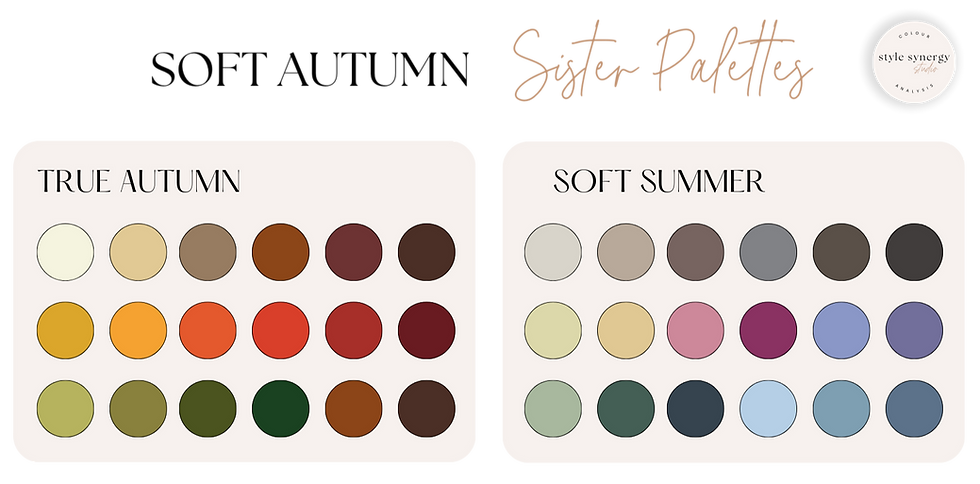
For Soft Autumn colour analysis, the two sister palettes are:
✔ Soft Summer — Soft Autumn’s cooler sister palette within seasonal colour analysis. It shares the same muted softness and low-contrast harmony, but shifts toward cooler undertones and a slightly mistier appearance. Colours feel smoky and refined rather than warmly blended. You may relate to the Soft Summer palette if your colouring is neutral-warm but leans cooler, and softly muted cool shades maintain balance without draining your natural warmth.
✔ True Autumn — Soft Autumn’s warmer, richer sister palette. It maintains the same underlying warmth, but with greater depth, saturation, and earthy intensity. Colours appear deeper and more golden rather than softly muted. This palette may feel like a better fit if your colouring handles stronger warm tones well, and rich, autumnal shades enhance your complexion while still preserving harmony without looking overpowering.
Why Sister Palettes Matter
✔ They’re helpful if you find yourself drawn to colours just outside your core palette
✔ They offer extra options when shopping – especially in stores that don’t cater to your exact palette
✔ They can make makeup, hair colour, and outfit planning more flexible while keeping your overall look cohesive
✔ They help if you sit between seasons and you want to fine-tune your wardrobe
✔ They add variety while maintaining balance
Your Soft Autumn Digital Colour Wallet includes 60 sister palette shades, so you can easily expand your wardrobe options while staying in your harmony zone. These tones are handpicked to work with your natural colouring without throwing off your look.
Soft Autumn Is About Overall Harmony, Not Guesswork
You don’t need to match every description to be a Soft Autumn. What matters most is how Soft Autumn colours interact with your unique features — enhancing warmth, softness, and balance.
Online guides can point you in the right direction, but only a professional colour analysis can confirm your season with certainty. At Style Synergy Studio, consultations are personalised, inclusive, and based on real draping — not quizzes, filters, or stereotypes.
Written by a professional colour analyst with experience working across all skin tones, contrast levels, and personal style goals.

By Monica Thompson, Founder and Lead Consultant, Style Synergy Studio
About The Author
Monica Thompson, Founder of Style Synergy Studio

Monica Thompson is a certified image consultant and the founder of Style Synergy Studio. With over a decade of experience and professional training from Study in Style, she has guided 5000+ women in discovering the colours that enhance their natural beauty and confidence. Monica is passionate about making colour analysis inclusive, empowering, and easy to apply to everyday life—because confidence is always in style.


